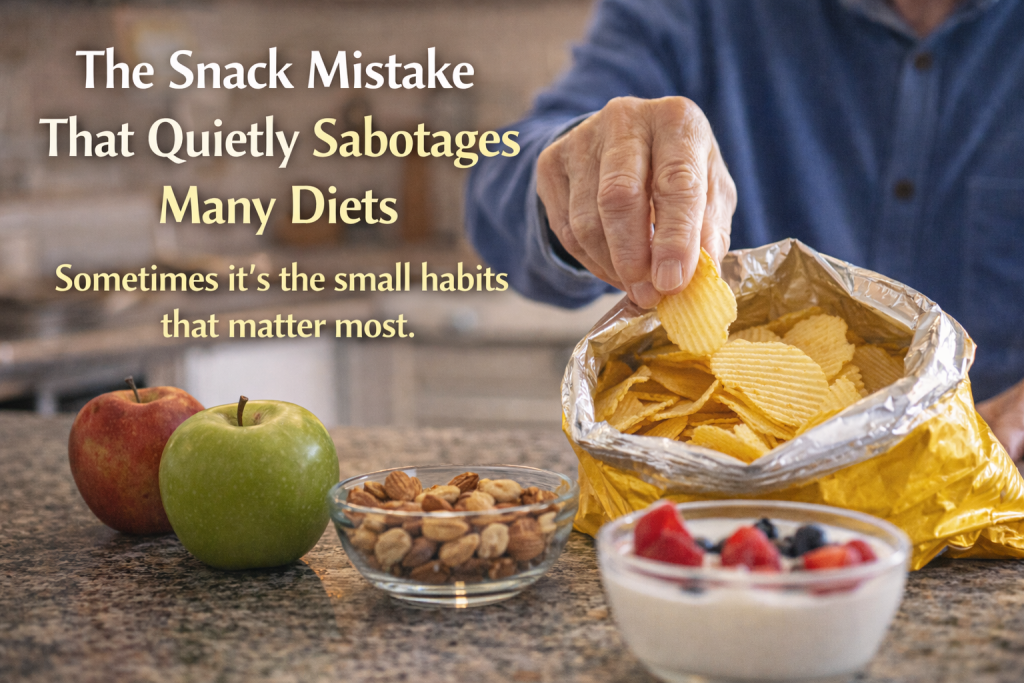
Most people think diets fail because of big meals.
But in many cases, the real problem is something much smaller.
Snacking.
Those little bites between meals often add up to more calories than people realize.
A handful of chips here.
A cookie in the afternoon.
A late-night snack in front of the television.
Individually they seem harmless.
But over the course of a day, or a week, they quietly undo the progress people are trying to make.
Why Snacking Becomes More Common as We Age
As people grow older, eating habits often change.
Many seniors eat smaller meals than they did when they were younger.
But that can lead to more frequent snacking throughout the day.
There are several reasons for this.
Sometimes it is simple boredom.
Other times it is convenience.
And sometimes it is because the body’s blood sugar levels fluctuate more easily, creating hunger between meals.
The problem is not the idea of snacking itself.
The problem is what people choose to snack on.
The Hidden Calories in Common Snacks
Many popular snack foods are designed to be highly appealing.
But they are also packed with calories, sugar, and processed ingredients.
Common examples include:
• Potato chips
• Cookies
• Candy
• Sugary granola bars
• Sweet breakfast pastries
These foods often provide very little nutritional value.
They deliver quick energy, but that energy disappears quickly, leaving people hungry again.
Why Simple Snacks Work Better
Healthy snacks do not need to be complicated.
In fact, the best options are often the simplest.
Foods that combine fiber, protein, and healthy fats tend to keep people satisfied longer.
Some easy examples include:
• An apple with peanut butter
• A handful of almonds or walnuts
• Yogurt with berries
• A boiled egg
• Whole-grain toast with avocado
These foods digest more slowly, which helps prevent sudden hunger spikes.
The Power of Planning
One of the easiest ways to improve snacking habits is simply to plan ahead.
When healthy foods are available, people tend to make better choices.
Keeping nutritious snacks in the kitchen can make a big difference.
Fresh fruit, nuts, yogurt, and simple homemade options are often the best choices.
They are satisfying, affordable, and easy to prepare.
A Smarter Way to Snack
Snacking does not have to ruin a diet.
In fact, when done correctly, it can help people maintain steady energy throughout the day.
The key is choosing foods that support health rather than undermine it.
Instead of processed snacks that offer little nutrition, focus on real foods that provide lasting fuel.
Small choices, repeated every day, can produce meaningful results over time.
The Bottom Line
Healthy eating is rarely about dramatic changes.
It is usually about small habits practiced consistently.
Snacking is one of those habits.
Choose wisely, and snacks can support your health.
Choose poorly, and they can quietly sabotage even the best intentions.
Sometimes the difference between success and frustration comes down to the smallest decisions.
Even the ones that happen between meals.