Most people do not ruin their weight loss plan at dinner.
They usually ruin it much earlier.
They skip breakfast, grab coffee, tell themselves they are being “good,” and then by 3 o’clock in the afternoon they are standing in the kitchen eating crackers like they are being paid by the crumb.
Sound familiar?
That is because hunger has a memory.
Ignore it too long, and it comes back with a marching band.
For many people trying to lose weight, especially after 50 or 60, breakfast is not just “the first meal of the day.” It is the meal that helps set the rhythm for the rest of the day.
A small, structured breakfast habit can help reduce overeating later, improve food decisions, and make weight loss feel less like a daily wrestling match.
And no, breakfast does not have to be a giant plate of food.
It just has to be useful.
That is where Joan Bars can fit in as a practical morning option: simple, portion-controlled, and easy to repeat.
Why Skipping Breakfast Can Backfire
Some people skip breakfast because they are not hungry.
Some skip it because they believe fewer meals automatically means fewer calories.
Sometimes that works.
But for many people, especially people who struggle with afternoon cravings or nighttime snacking, skipping breakfast can backfire.
The body may not complain at 8 a.m.
But by late afternoon, it sends a bill.
That bill often arrives in the form of chips, cookies, bread, leftovers, or “just one little bite” that somehow turns into a kitchen investigation.
Skipping breakfast can also lead to what I call the “calorie boomerang.”
You throw calories away in the morning, and they come flying back later with interest.
The better goal is not always to eat less early.
The better goal is to eat smarter early.
Breakfast Helps Set Your Appetite Pattern
A structured breakfast gives your day a starting point.
It tells your body, “We are not panicking today.”
That matters because uncontrolled hunger often leads to poor decisions.
When hunger gets too strong, most people do not suddenly crave steamed broccoli. Nobody opens the refrigerator at 9 p.m. and says, “I hope there’s kale.”
Strong hunger wants fast energy.
Fast energy usually means sugar, starch, or high-calorie snacks.
A simple breakfast with structure can help prevent that cycle.
It does not need to be complicated.
It can be a Joan Bar with coffee or tea.
It can be a protein-rich breakfast.
It can be yogurt, eggs, oatmeal, or another planned option.
The important thing is that it is planned, satisfying, and repeatable.
Why “Repeatable” Matters More Than Perfect
Many diets fail because they ask people to become completely different overnight.
Suddenly you are supposed to shop differently, cook differently, think differently, eat differently, and apparently become the kind of person who enjoys weighing lettuce.
That is not a plan.
That is punishment with measuring cups.
A better strategy is to find one or two habits you can repeat.
A simple breakfast habit is a good place to start because it removes one decision from the day.
Instead of asking, “What should I eat this morning?” you already know.
That reduces friction.
And friction is what kills good intentions.
Weight loss is not only about willpower.
It is about making the better choice easier to repeat.
How Joan Bars Can Help With Morning Structure
Joan Bars are useful because they create a simple morning routine.
You do not have to cook.
You do not have to guess.
You do not have to stand in front of the refrigerator like you are waiting for it to give a speech.
You have a planned option.
That matters for people who want portion control without making every meal a math problem.
A Joan Bar can help you start the day with structure, especially when paired with water, coffee, tea, or another sensible beverage.
It can also help prevent the dangerous “I didn’t eat all morning, so now I deserve everything” mindset.
Because let’s be honest: the word “deserve” has caused many diet plans to collapse.
The Mid-Morning Trap
One reason breakfast matters is because of the mid-morning trap.
This is when people skip breakfast, then grab something quick around 10 or 11.
Usually it is not a carefully planned meal.
It is whatever is nearby.
A pastry.
A donut.
A handful of crackers.
A “healthy” muffin the size of a softball.
Or the legendary office snack table, where good intentions go to retire.
A planned breakfast helps you avoid emergency eating.
Emergency eating is rarely healthy eating.
When hunger makes the decision, the decision is usually loud, fast, and covered in crumbs.

Breakfast and Blood Sugar Swings
For many older adults, appetite and energy are affected by blood sugar swings.
A sugary breakfast may give quick energy, but it can also leave you hungry again later.
A breakfast that is more balanced and satisfying may help some people feel steadier.
This does not mean everyone needs the same breakfast.
Some people do well with eggs.
Some prefer oatmeal.
Some want yogurt.
Some want a simple bar they can use as part of a routine.
The point is to avoid the roller coaster.
At our age, we have earned peace and quiet.
We do not need our breakfast behaving like an amusement park ride.
What Makes a Good Weight-Loss Breakfast?
A good weight-loss breakfast should do a few things.
It should be portion-controlled.
It should be satisfying.
It should be easy enough to repeat.
It should not trigger more cravings.
It should fit your lifestyle.
And most importantly, it should help you make better choices later.
That last part is important.
The value of breakfast is not only what happens in the morning.
It is what breakfast prevents later.
If a planned morning routine helps you avoid random snacking, overeating, or late-night kitchen wandering, it has done its job.
Do You Have to Eat Breakfast?
No.
Some people do well without breakfast.
Some people use intermittent fasting and feel fine.
But many people who struggle with weight loss do not skip breakfast in a controlled, planned way.
They skip breakfast accidentally, get too hungry, and then overeat later.
That is different.
The issue is not whether every person must eat breakfast.
The issue is whether your current pattern is helping you or hurting you.
Ask yourself:
Do I overeat later when I skip breakfast?
Do I snack more in the afternoon?
Do I crave sweets at night?
Do I make worse food choices when I start the day with only coffee?
If the answer is yes, then a small breakfast habit may help.
Not because breakfast is magic.
Because structure is powerful.

A Simple Joan Bars Morning Plan
Here is a simple routine:
Start the morning with water.
Have coffee or tea if you enjoy it.
Use a Joan Bar as a planned breakfast option.
Avoid random snacking until lunch.
Eat a balanced lunch with protein and vegetables.
Pay attention to whether afternoon cravings improve.
That is it.
No drama.
No complicated rules.
No pretending celery is dessert.
Just a small morning structure designed to make the rest of the day easier.
Why Small Habits Win
Most people want big results, so they look for big changes.
But big changes often fail because they are hard to maintain.
Small habits can be repeated.
And repeated habits shape results.
A simple breakfast routine may not sound exciting.
But neither does brushing your teeth, and that seems to be working out pretty well for civilization.
The goal is consistency.
Weight loss after 50 or 60 should not be about punishing yourself.
It should be about building a routine that supports you.
Final Thought
The small breakfast habit is not about eating more.
It is about eating with purpose.
If skipping breakfast leads you to overeat later, then your morning may be costing you more than you think.
A simple, structured breakfast can help control hunger, reduce decision fatigue, and make your weight-loss plan easier to follow.
Joan Bars can be part of that routine because they are simple, portion-controlled, and easy to repeat.
Not magic.
Just practical.
And practical wins more often than perfect.
Especially when perfect is hungry by 3 p.m.

FAQ Section
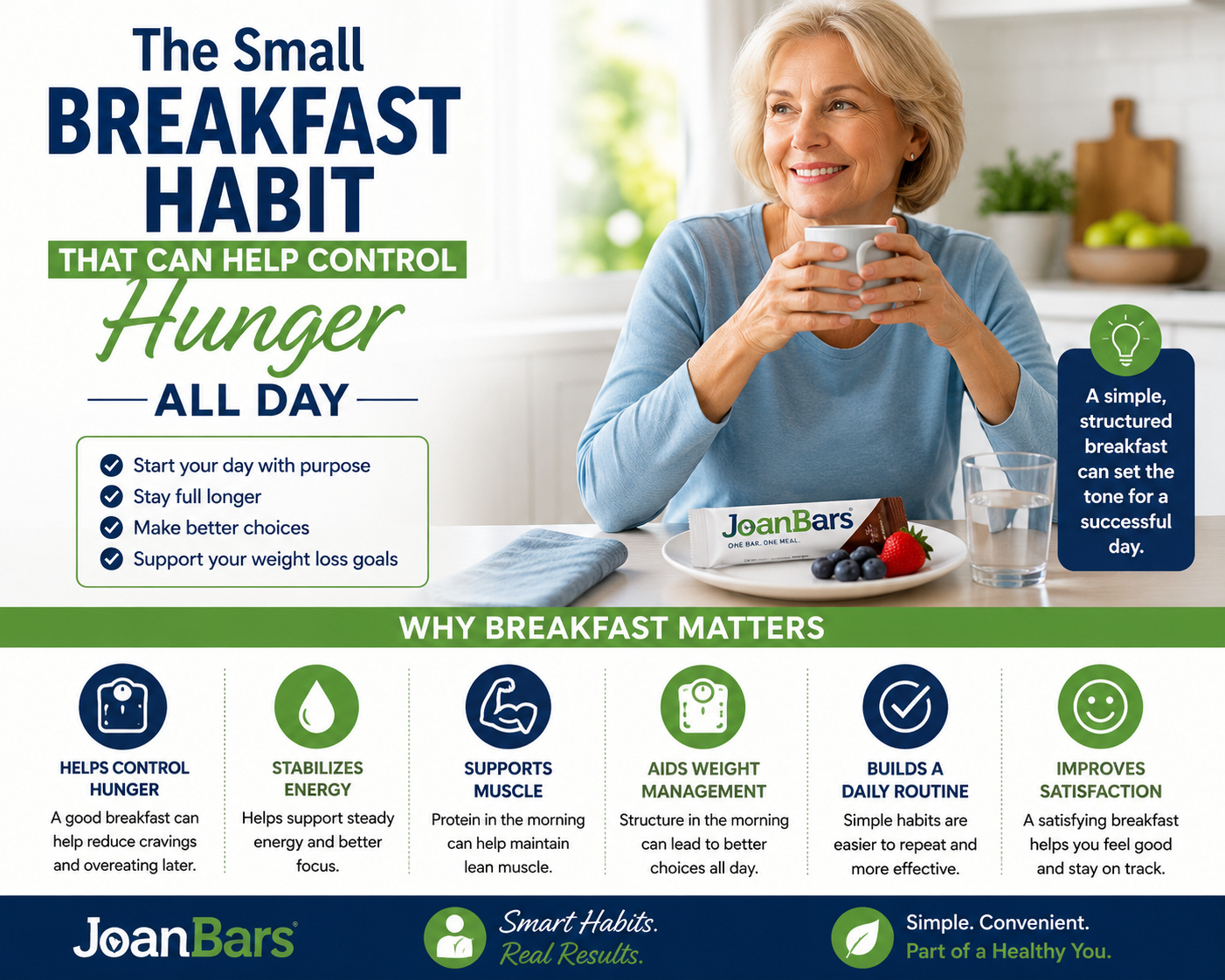
The Small Breakfast Habit That Can Help Control Hunger All Day
Does eating breakfast help with weight loss?
For many people, yes. A simple, structured breakfast can help reduce hunger later in the day, which may prevent overeating, random snacking, and late-night cravings. Breakfast is not magic, but structure helps.
Do I have to eat breakfast to lose weight?
No. Some people do well without breakfast, especially if they follow a planned eating schedule. But if skipping breakfast leads to afternoon cravings or nighttime snacking, adding a small breakfast habit may help.
Why do I get so hungry in the afternoon?
Afternoon hunger often happens when you eat too little earlier in the day, rely only on coffee, or choose foods that do not keep you satisfied. A planned breakfast may help control hunger before it gets out of hand.
How can Joan Bars fit into my morning routine?
Joan Bars can be used as a simple, portion-controlled breakfast option with coffee, tea, or water. They are designed to make mornings easier by reducing food decisions and helping you start the day with structure.
Are Joan Bars a meal replacement?
Joan Bars can be used as part of a structured eating plan, but they should fit into your overall nutrition needs. They are best used as a practical tool for portion control, not as your entire diet.
What makes a good breakfast for weight loss?
A good weight-loss breakfast should be simple, satisfying, portion-controlled, and easy to repeat. The goal is to help control hunger and support better food choices later in the day.
Can breakfast help reduce cravings?
Yes, for many people. A planned breakfast may help prevent the “too hungry” feeling that often leads to cravings for sweets, chips, bread, or other quick snacks later in the day.
Is skipping breakfast bad?
Not always. Skipping breakfast is not automatically bad, but it can become a problem if it causes overeating later. The real question is whether your current routine is helping you reach your goals.
Can seniors use Joan Bars for weight control?
Yes. Joan Bars can be a useful option for seniors who want a simple, convenient, portion-controlled way to support a weight management routine. Seniors should also focus on protein, hydration, movement, and balanced meals.
Should I talk to my doctor before starting a weight loss plan?
Yes, especially if you have diabetes, kidney disease, heart disease, take medications, or are using prescription weight loss drugs. A doctor or qualified health professional can help you make sure your plan is safe for your personal situation.
Read other Blog :- Read Now