Losing weight after 50 can feel unfair.
When you were younger, you could skip dessert for three days, take one long walk, and suddenly your pants forgave you.
After 50?
You look at a muffin through a bakery window and somehow your waistband files a complaint.
But here is the good news: weight loss after 50 is still possible. It just needs to be approached differently. Not with punishment. Not with starvation. Not with complicated diet rules that require a calculator, a food scale, and the patience of a saint.
The answer is often simpler than people think.
You need steady habits, better food choices, portion control, enough protein, movement you can actually do, and a plan that fits real life.
That is where the Joan Bars approach makes sense.
Your Body Changes After 50
After 50, the body does not always respond the same way it did at 25 or 35.
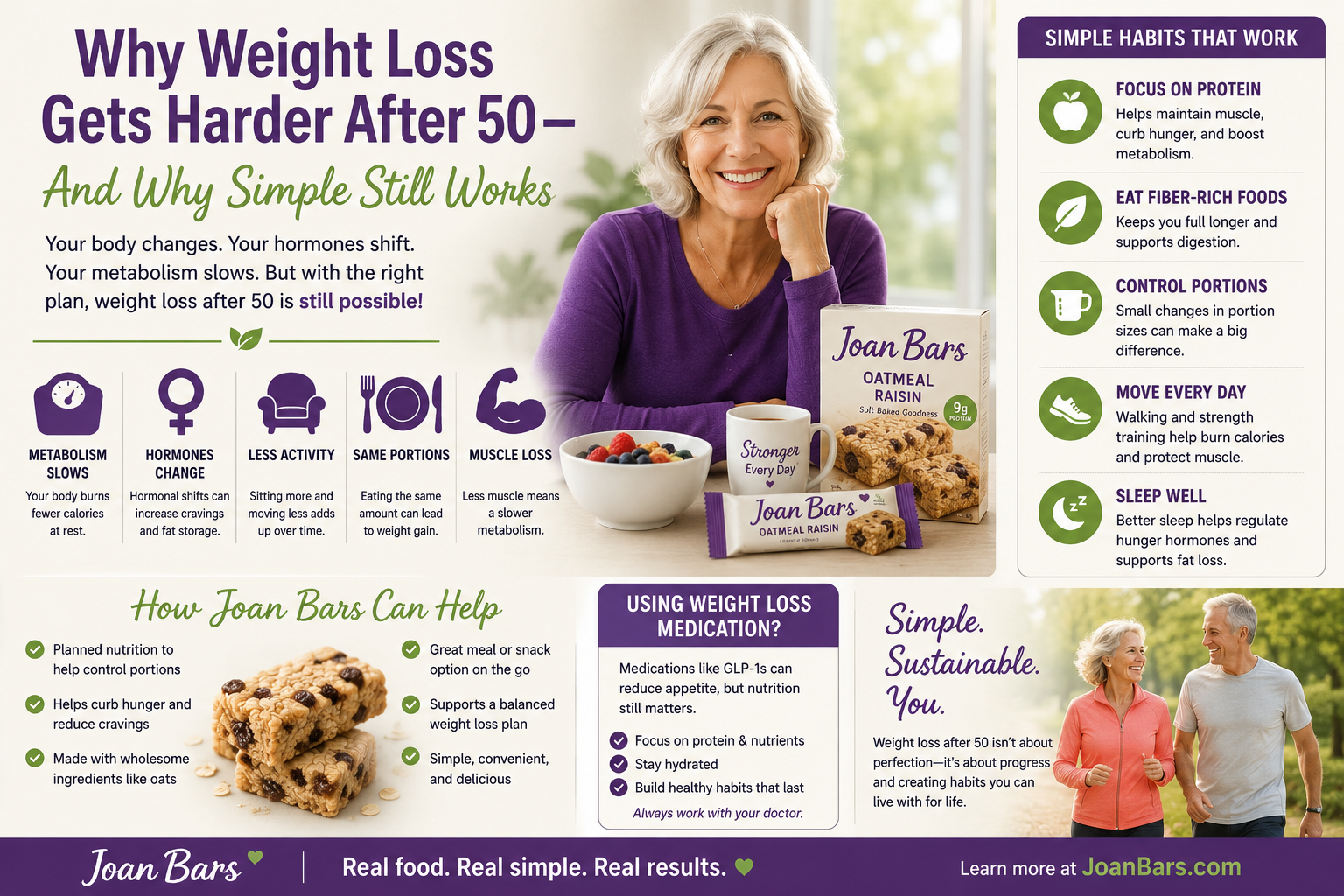
Muscle mass tends to decline with age. That matters because muscle helps your body use energy. Less muscle can mean a slower metabolism.
Hormonal changes can also affect appetite, fat storage, sleep, and energy. Many people also become less active without realizing it. They move less, sit more, and burn fewer calories during the day.
Then there is the sneaky part: portions often stay the same even though activity drops.
That combination can lead to gradual weight gain.
Not overnight.
Not dramatically.
Just one pound here, two pounds there, until suddenly the bathroom scale starts acting like it has bad news to deliver.
The Problem With Extreme Diets
Many people try to lose weight by going too extreme.
They cut out entire food groups.
They skip meals.
They follow complicated rules.
They try to live on shakes, salads, and guilt.
That may work briefly, but it often fails long-term.
Why?
Because the plan is too hard to live with.
A weight loss plan should not require you to become a different person. It should help the person you already are make better daily choices.
Extreme diets often create hunger, cravings, frustration, and rebound eating. You may lose weight at first, but if the plan feels miserable, it usually does not last.
And any plan that does not last is not really a plan.
It is a temporary hostage situation with lettuce.
Simple Structure Beats Willpower
Willpower is overrated.
Most people do not fail because they are weak. They fail because they are trying to make too many decisions every day.
What should I eat?
How much should I eat?
Did I eat too much?
Should I skip lunch?
Can I have a snack?
Did I ruin the day already?
That kind of thinking wears people out.
Simple structure helps.
When meals and snacks are planned, you do not have to wrestle with yourself all day. You know what comes next. That reduces impulse eating and makes consistency easier.
The Joan Bars approach is built around this idea: make weight control simpler, more practical, and easier to follow.
Why Portion Control Matters
Most weight problems do not come from one giant mistake.
They come from small daily overages.
A little extra cereal.
A bigger sandwich.
A second helping.
A few bites while standing at the counter.
A snack that becomes a meal wearing a disguise.
Portion control works because it removes guesswork.
You do not need to be perfect. But you do need a reliable way to avoid overeating without feeling deprived.
That is why planned bars, simple meals, and structured eating can help. They give your day a rhythm.
Instead of asking, “What damage can I do in the refrigerator?” you already know the plan.

Protein Becomes More Important With Age
After 50, protein matters more than many people realize.
Protein helps support muscle, fullness, recovery, and steady energy. When people diet without enough protein, they may lose muscle along with fat, and that is not what you want.
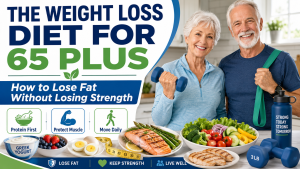
You want to lose fat while protecting strength.
That means meals should include protein from foods like eggs, fish, chicken, turkey, Greek yogurt, cottage cheese, beans, lentils, tofu, or other protein-rich options.
For many people, breakfast is the weakest meal. A sugary breakfast can leave you hungry again quickly.
A better breakfast helps set the tone for the day.
Fiber Helps Control Hunger
Fiber is one of the quiet heroes of weight loss.
It helps you feel fuller, supports digestion, and can slow how quickly food leaves the stomach. That can reduce cravings and help control appetite.
High-fiber foods include oats, beans, lentils, berries, vegetables, apples, chia seeds, flaxseed, and whole grains.
This is one reason oatmeal-based bars make sense in a practical weight loss plan. Oats are familiar, affordable, filling, and easy to include.
No drama. No fancy diet theater. Just useful food.
Movement Still Matters
You do not need to train like an Olympic athlete to lose weight after 50.
In fact, most people should not begin there.
Walking is a strong starting point. Strength training is also important because it helps protect muscle. Even simple exercises using body weight, resistance bands, or light weights can help.
The goal is not to punish yourself for eating.
The goal is to keep your body active enough to support weight loss, strength, balance, and better aging.
Think of movement as a signal to your body:
“Keep the muscle. Use the fuel. We are still in business.”
Sleep Can Make or Break Weight Loss
Poor sleep can increase hunger, cravings, and fatigue.
When you are tired, the body often asks for quick energy. That usually means sugar, refined carbs, and snacks that do not help your goals.
Sleep also affects hormones related to appetite and metabolism.
So if weight loss is difficult, do not only ask what you are eating. Ask how you are sleeping.
A tired brain makes poor food decisions.
A tired brain also says things like, “Cookies are basically round vitamins.”
They are not. Nice try.

How Joan Bars Can Fit Into a Weight Loss Plan
Joan Bars are not about magic.
They are about structure.
A planned bar can help replace a higher-calorie snack or meal, reduce decision fatigue, and make portion control easier.
The advantage is simplicity.
You know what you are eating.
You know when you are eating it.
You are less likely to graze.
You are less likely to overthink.
You are less likely to grab whatever is nearby.
For many people, that is half the battle.
A Joan Bars-style approach can work especially well when combined with:
A sensible breakfast
A protein-focused meal
Vegetables and fiber
Daily walking
Hydration
Better sleep
Reduced evening snacking
Weight loss is not about one perfect food. It is about building a pattern that works.
What About Modern Weight Loss Medications?
Today, more people are using modern weight loss medications such as GLP-1 drugs under medical supervision.
These medications may help reduce appetite and food cravings for some people. But they do not replace the need for good nutrition.
In fact, if appetite is lower, food quality matters even more.
People using weight loss medications still need protein, fiber, fluids, and enough nutrients. They also need to avoid falling into the trap of barely eating and losing muscle.
A structured eating plan can help support healthier habits while using medication.
The goal is not just to eat less.
The goal is to eat better, protect muscle, and create habits that last.
Always work with a qualified medical professional before starting or changing any prescription medication.
The Real Goal Is Sustainable Weight Loss
Fast weight loss gets attention.
Sustainable weight loss changes lives.
After 50, the goal should not be punishment. It should be control, confidence, strength, and better health.
You want a plan you can live with.
A plan that allows normal food.
A plan that does not require perfection.
A plan that helps you recover after a bad day.
A plan that makes tomorrow easier.
That is why simple still works.
Not because it is flashy.
Because it is repeatable.
Final Thoughts
Weight loss after 50 can be harder, but it is not hopeless.
Your body may have changed, but it is still listening.
It responds to better food, better portions, protein, fiber, movement, sleep, hydration, and consistency.
The Joan Bars approach is built on a practical idea: make weight loss easier to follow by giving your day structure.
Not magic.
Not misery.
Just a smarter, simpler way to take control.
Because after 50, the goal is not to chase your younger body.
The goal is to build a healthier body for the life you are living now.
And frankly, that body deserves a little respect. It has carried you this far, and probably through a few buffets it would rather not discuss.

FAQ
Why is weight loss harder after 50?
Weight loss can become harder after 50 because muscle mass often declines, metabolism may slow, hormones change, activity levels may drop, and sleep problems can affect appetite and cravings.
Can seniors still lose weight?
Yes. Seniors can lose weight with a safe, realistic plan that includes portion control, protein, fiber, movement, hydration, and consistent habits.
Do extreme diets work after 50?
Extreme diets may cause short-term weight loss, but they are often hard to maintain. A simpler, more sustainable plan is usually better for long-term success.
Why is protein important for weight loss after 50?
Protein helps support muscle, fullness, and strength. This is especially important with age because preserving muscle is part of healthy weight loss.
Why is fiber helpful for weight control?
Fiber helps you feel full, supports digestion, and may help reduce overeating. Foods like oats, beans, vegetables, berries, and whole grains can be helpful.
How can Joan Bars help with weight loss?
Joan Bars can help by adding structure and portion control to the day. They may reduce grazing, simplify food decisions, and help replace higher-calorie snacks or meals.
Can Joan Bars be used with weight loss medications?
A structured eating plan may support people using weight loss medications, but anyone taking prescription medication should follow their doctor’s guidance. Protein, fiber, hydration, and nutrition remain important.
What is the best exercise for weight loss after 50?
Walking is a good starting point for many people. Strength training is also important because it helps preserve muscle, balance, and metabolism.
Read other Blog :- Read Now