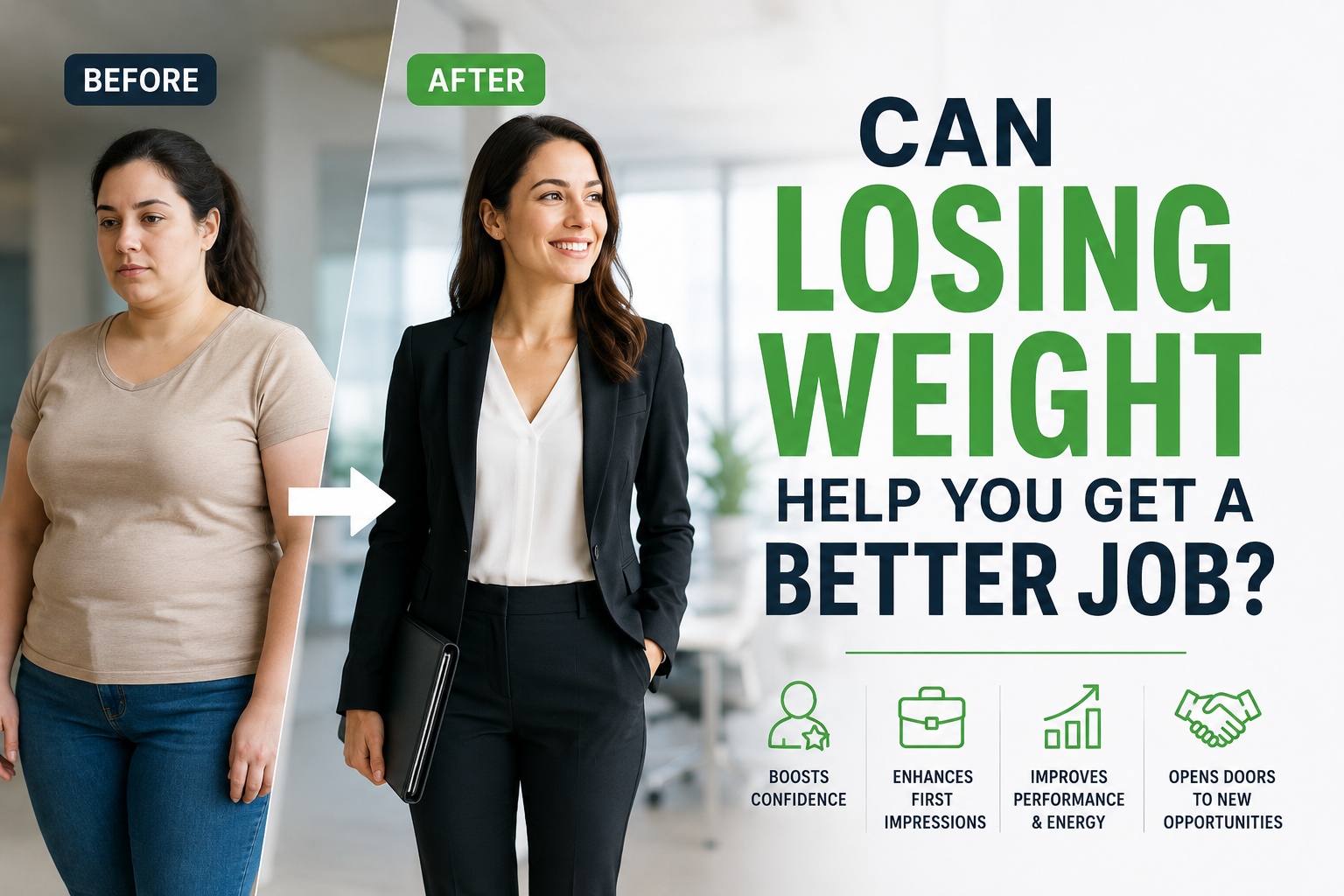
It’s one of those questions people think but rarely say out loud.
You’ve sent the applications. You’ve updated the resume. You’ve done everything the career coaches say to do. And somewhere in the back of your mind, a quieter, more uncomfortable thought surfaces: Does the way I look affect my chances?
It’s a legitimate question — and it deserves a legitimate answer, not platitudes or avoidance. The research on weight, appearance, and career outcomes is real, complicated, and worth understanding clearly. So let’s talk about it honestly.
The Uncomfortable Reality: Weight Bias in the Workplace Exists
Let’s not pretend otherwise. Studies consistently show that weight discrimination is one of the most prevalent forms of bias in hiring and the workplace — and unlike many other forms of discrimination, it remains largely unaddressed by law in most places.
A landmark study published in the International Journal of Obesity found that obese candidates were rated as less competent, less productive, and less likely to be hired than equally qualified candidates at lower body weights — even when evaluators were presented with identical resumes and job histories. The difference existed purely because of appearance.
Research from Yale University’s Rudd Center for Food Policy and Obesity found that weight stigma in employment is reported by 54% of people with obesity. It shows up at the hiring stage, in performance reviews, in promotion decisions, and in day-to-day interactions with colleagues and management. Women face it more acutely than men. People in customer-facing roles face it more than those working behind the scenes.
A 2011 study in the Journal of Applied Psychology found that employees perceived as overweight earned significantly less on average than their non-overweight peers doing identical work — a wage gap that compounded over careers.
None of this is fair. None of it reflects actual competence or capability. But pretending it doesn’t exist helps no one who is navigating a real job market today.
But Here’s What the Research Also Shows
Weight bias, while real, is far from the dominant factor in hiring outcomes — and it is not the most powerful lever you can pull.
Studies on what actually determines hiring decisions consistently show that the top factors are: relevant skills and experience, interview performance and communication ability, cultural fit as perceived by the interviewer, and personal presentation and confidence. Weight is a variable — but it sits well below these factors in its measurable impact.
More importantly, research on what improves career outcomes for people who lose weight reveals something telling: the professional benefits of weight loss are driven primarily by improvements in confidence, energy, and self-presentation — not by the reduction of bias in others.
A 2014 study published in the Journal of Vocational Behavior found that individuals who lost weight and reported higher subjective wellbeing, increased energy, and improved self-confidence showed measurably better interview performance and career advancement. Those who lost weight without corresponding improvements in confidence and energy showed no significant career benefit.
This is a crucial distinction. It means the career benefit of weight loss — to the extent it exists — comes mostly from inside you, not from changing how biased recruiters see you.
What Actually Happens When You Improve Your Health
When people lose weight through sustainable, health-focused means — rather than crash dieting or extreme restriction — they typically report a cluster of changes that genuinely do affect professional performance.
Energy and stamina increase. Fatigue is one of the most common and underreported barriers to professional performance. When people carry excess weight, particularly visceral fat around the abdominal organs, it drives chronic low-grade inflammation that creates persistent tiredness. Reducing this through exercise and dietary improvement directly improves the energy and mental sharpness you bring to work every day.
Cognitive function improves. Multiple studies have linked metabolic health improvements — better blood sugar regulation, reduced inflammation, improved sleep quality — to sharper focus, better working memory, and improved problem-solving ability. These are not small effects. A 2013 study in Obesity found that bariatric surgery patients, in addition to significant weight loss, showed measurable improvements in memory and executive function within 12 weeks.
Sleep quality improves dramatically. Excess weight, particularly around the neck and abdomen, is strongly associated with sleep apnea and poor sleep quality. Better sleep alone — even without significant weight loss — is one of the most powerful career improvements available, improving mood, decision-making, creativity, and interpersonal effectiveness.
Physical confidence in interviews and presentations improves. How you carry yourself — posture, movement, eye contact, the groundedness of your presence — changes when you feel physically strong and well. This isn’t about conforming to a body ideal. It’s about the genuine neurological link between physical vitality and social confidence. Research on “power posing” and body language aside, the simple reality is that people who feel physically good tend to project more assurance, and assurance is persuasive.
The Confidence Variable: The Most Underrated Career Asset
Every career counselor will tell you that confidence is one of the most decisive factors in career success. What they don’t always say is where that confidence comes from — and how to build it.
For many people, improving their physical health is one of the most direct routes to genuine confidence — not because thinner is better, but because taking action on your own behalf, building strength, improving endurance, and feeling capable in your body creates a psychological foundation that carries into every professional interaction.
This isn’t about appearance. A person who has started strength training, walks three miles every morning, and feels strong and energetic carries themselves differently in a job interview than they did six months earlier — regardless of how much weight they’ve actually lost.
The research on exercise and confidence is unambiguous. Regular physical activity consistently reduces anxiety, improves mood, builds self-efficacy (the belief that your actions produce results), and improves sleep. Each of these directly translates to better professional performance.
If the question is “will losing weight help my career,” a more precise and useful version of that question might be: “will prioritizing my physical health, energy, and strength help my career?” The answer to that version is clearly and demonstrably yes.
What Won’t Help: The Wrong Approach to Weight and Career
It’s worth saying clearly: crash diets, extreme calorie restriction, and weight loss approaches that leave you depleted, hungry, and mentally foggy will not improve your career performance — even if the scale moves.
Calorie restriction below about 1,200 calories per day has been shown to impair cognitive function, reduce working memory, increase irritability, and lower motivation. A person who has lost 15 pounds through extreme restriction but is chronically hungry, tired, and foggy is not going to interview better or perform better at work. They may actually perform worse.
Similarly, focusing on weight loss as a career strategy without addressing the underlying skills, communication, and professional development gaps is misplaced effort. The colleague who stays late to learn a new skill, invests in a public speaking course, or builds a stronger professional network will nearly always outpace the person who loses 20 pounds but makes no other changes.
The Real Career Investment Worth Making
If you want to improve your professional outcomes through health, the most effective approach is not weight-focused — it’s performance-focused. Ask instead:
Am I sleeping well enough to think clearly at work? Poor sleep is arguably the single largest correctable drain on professional performance for most working adults. If the answer is no, this is the first thing to fix.
Do I have enough energy to sustain focus through the afternoon? Chronic fatigue — driven by poor nutrition, sedentary behavior, blood sugar instability, or poor sleep — is a silent career killer. Regular exercise, stable blood sugar through balanced eating, and adequate hydration directly address this.
Am I walking into interviews and presentations with physical confidence? If not, building a consistent exercise habit — even walking 30 minutes a day — will deliver measurable improvements in posture, presence, and calm.
Is my appearance professional and put-together? This matters, and it is worth attending to — not as a weight question, but as a basic professional self-presentation question. Clean, well-fitting clothes that suit your actual body today, a confident posture, and grooming appropriate to your industry communicate professionalism regardless of body size.
The Honest Bottom Line
Yes — weight bias in hiring and the workplace is real, documented, and unfair. Acknowledging that reality is not defeatism; it’s clarity.
But the most career-relevant improvements that come from health changes are driven by how you feel, not how you look to biased observers: more energy, sharper thinking, better sleep, stronger confidence, and the self-efficacy that comes from caring for yourself.
Pursue your health because it makes you feel capable, energetic, and strong. Those qualities will show up in every interview, every presentation, and every workday — and they will take you considerably further than the number on a scale.
The best career investment you can make in your body is the one that makes you feel like the most capable version of yourself. That’s what moves careers forward — not a target weight, but a quality of life that shows up in everything you do.
This article is for informational purposes only and is not intended as medical or dietary advice. Consult a qualified healthcare provider before making significant changes to your diet or exercise routine.