Trying to lose weight when life is busy can feel like trying to fold laundry during a hurricane. You start with good intentions, then the day gets away from you. Suddenly it is 6:30 p.m., you are hungry, tired, and standing in front of the refrigerator like it owes you an explanation.
That is where meal prep can help.
Meal prep is not about becoming a professional chef. It is not about spending Sunday afternoon cooking 27 identical chicken breasts while pretending you enjoy it. Meal prep simply means making food decisions before you are hungry, rushed, stressed, or tempted by whatever is fastest.
For weight loss, that matters because the worst food choices often happen when you have no plan.
The goal is not perfection. The goal is to make the healthy choice easier than the unhealthy choice.
Why Meal Prep Helps With Weight Loss
Weight loss usually comes down to consistent habits over time. That includes healthy eating, regular physical activity, enough sleep, and stress management. The CDC notes that healthy weight loss works best when it includes a specific plan, healthy eating patterns, physical activity, enough sleep, and stress management.
That is why meal prep is so useful. It turns weight loss from a daily negotiation into a system.
Without meal prep, every meal becomes a new decision.
“What should I eat?”
“Do I have anything healthy?”
“Should I order food?”
“Maybe I’ll just snack.”
“I’ll start again tomorrow.”
That mental tug-of-war wears people out. Meal prep removes some of the daily decision-making. You already know what lunch is. You already have dinner ingredients ready. You already have a better snack waiting.
That is not glamorous. But it works.
Start With the Real Problem: Time
Most busy people fail at meal prep because they try to do too much.
They see beautiful meal prep videos online with color-coded containers, perfectly sliced vegetables, and meals lined up like soldiers on parade. That looks nice, but it may not fit real life.
Real-life meal prep should be simple.
You do not need to cook every meal for the week. You do not need fancy containers. You do not need a $400 blender. You need a repeatable system that helps you eat better when time is short.
Start by asking one question:
Where do I usually make my worst food choices?
For some people, it is breakfast. They skip it, get too hungry, then eat whatever appears.
For others, it is lunch. They are busy, so they grab fast food or snack all afternoon.
For many people, it is dinner. They arrive home tired, and cooking feels like punishment for surviving the day.
Do not meal prep everything at first. Fix the weakest link first.
Use the Plate Method
One of the simplest ways to build weight-loss meals is the plate method.
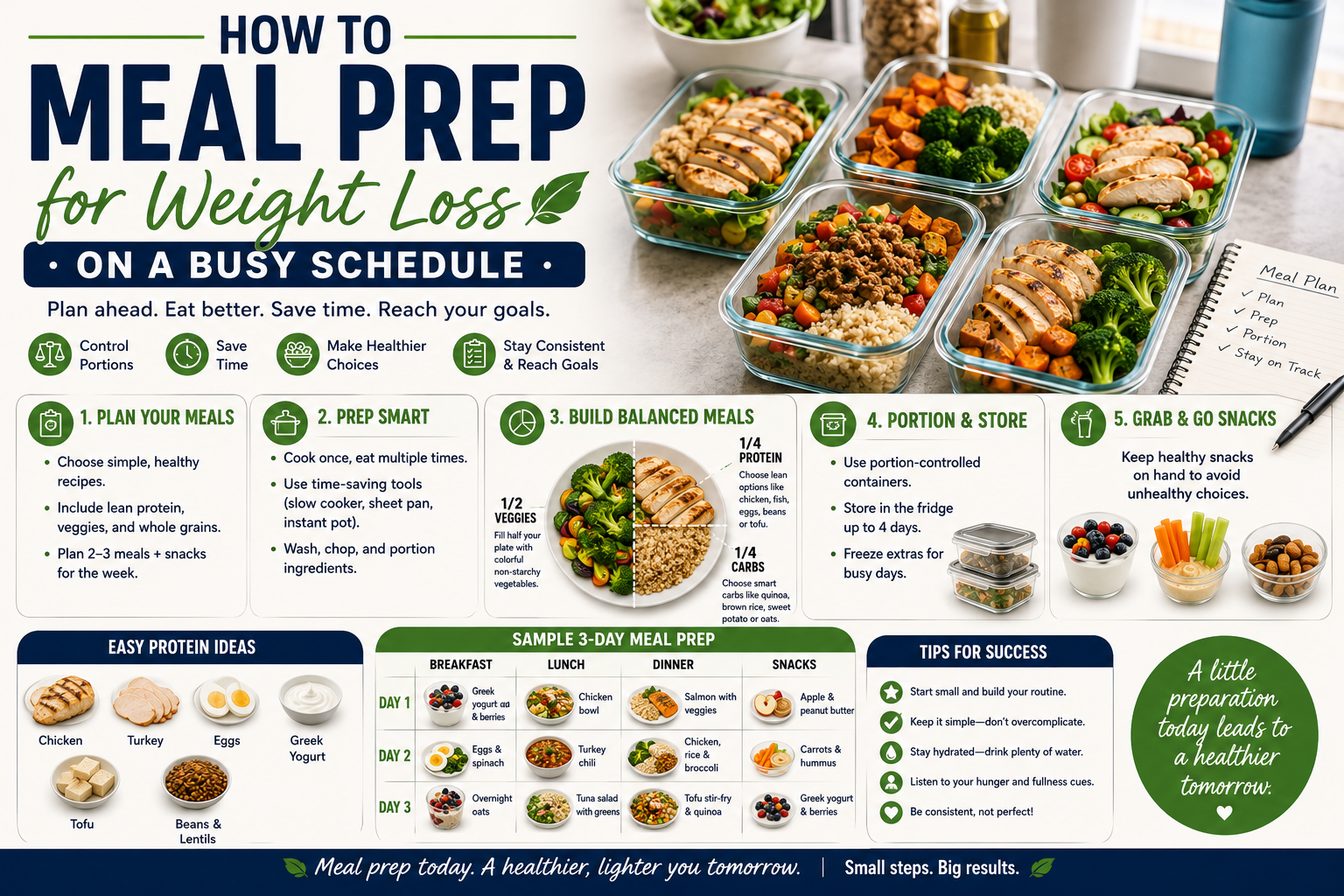
Harvard’s Healthy Eating Plate recommends making half your plate vegetables and fruits, one-quarter whole grains, and one-quarter healthy protein, with healthy oils in moderation and water, coffee, or tea instead of sugary drinks.
For weight loss, this is practical because it gives you structure without making you count every crumb like a courtroom accountant.
A simple meal prep plate can look like this:
Half the meal: vegetables
One-quarter: protein
One-quarter: smart carbohydrate
Small amount: healthy fat or sauce
Examples:
Chicken, roasted vegetables, and brown rice
Turkey meatballs, salad, and sweet potato
Greek yogurt, berries, and nuts
Eggs, vegetables, and whole-grain toast
Salmon, green beans, and quinoa
Beans, vegetables, salsa, and a small portion of rice
The meal does not need to be fancy. It needs to be repeatable.
Protein Is Your Friend
For weight loss, protein is important because it helps you feel full and supports muscle. This becomes even more important as we get older because losing weight without enough protein and movement can mean losing muscle, not just fat.
That is not the goal.
The goal is to lose excess fat while keeping strength, balance, and mobility.
Easy meal prep proteins include:
Eggs
Greek yogurt
Cottage cheese
Chicken breast or thighs
Turkey
Tuna or salmon packets
Beans and lentils
Tofu
Lean beef
Fish
Protein shakes when appropriate
You do not need a different protein every day. That is where people make meal prep too hard.
Choose two proteins for the week. That is enough.
For example:
Chicken for lunch
Eggs or Greek yogurt for breakfast
Turkey chili for dinner
Tuna packets for emergency meals
Simple beats impressive.
Cook Once, Use Three Ways
This is the secret busy people need.
Do not think in terms of recipes. Think in terms of ingredients you can reuse.
If you cook chicken on Sunday, do not eat the same dry chicken meal five days in a row. That is how people lose the will to continue.
Instead, cook one protein and use it three ways:
Chicken bowl with rice and vegetables
Chicken salad wrap
Chicken soup
Chicken with salsa and beans
Chicken over greens with avocado
Chicken with roasted vegetables
Same base. Different meal.
The same works with ground turkey:
Turkey taco bowl
Turkey lettuce wraps
Turkey with marinara over vegetables
Turkey chili
Turkey stuffed peppers
This keeps meal prep from becoming boring. Boredom is dangerous. Boredom is when the pizza menu starts whispering your name.
The Busy Schedule Meal Prep Formula
Here is a simple weekly formula:
Pick 2 proteins.
Pick 2 vegetables.
Pick 1 or 2 smart carbohydrates.
Pick 2 easy snacks.
Pick 1 emergency meal.
That is it.
Example:
Proteins: chicken and eggs
Vegetables: broccoli and salad mix
Carbohydrates: sweet potatoes and brown rice
Snacks: Greek yogurt and apples
Emergency meal: tuna packet with whole-grain crackers and salad
Another example:
Proteins: turkey chili and cottage cheese
Vegetables: frozen mixed vegetables and spinach
Carbohydrates: quinoa and beans
Snacks: boiled eggs and berries
Emergency meal: rotisserie chicken with bagged salad
This gives you flexibility without chaos.
Use Convenience Foods Without Shame
Some people think meal prep means everything must be chopped by hand while soft music plays in the background.
Nonsense.
Busy people should use healthy convenience foods.
That can include:
Bagged salads
Frozen vegetables
Pre-cut vegetables
Rotisserie chicken
Microwave brown rice
Canned beans
Canned tuna or salmon
Pre-washed greens
Hard-boiled eggs
Plain Greek yogurt
Frozen berries
The Academy of Nutrition and Dietetics says planning can help people eat well at home and away, including navigating the grocery store and making nutritious choices.
Healthy convenience is still convenience. Use it.
A bag of frozen vegetables is not a moral failure. It is a strategy.
Make Breakfast Automatic
Breakfast is one of the easiest meals to meal prep because it can be repeated.
You do not need seven different breakfasts. You need one or two that work.
Good weight-loss breakfast ideas:
Greek yogurt with berries
Cottage cheese with fruit
Egg bites with vegetables
Oatmeal with protein added
Boiled eggs and fruit
Protein smoothie
Whole-grain toast with eggs
Chia pudding, if you like it
The goal is protein plus fiber.
A breakfast built only on sugar and refined carbohydrates can leave you hungry again quickly. Then the snack parade begins.
A simple breakfast like Greek yogurt with berries can feel like dessert, provide protein, and take two minutes. That is not just food. That is a small act of self-defense.
Prepare Lunch Before You Need It
Lunch is where many busy people lose the battle.
They are working. They are running errands. They are taking care of family. They are in the car. Then hunger arrives, and hunger is not known for making wise decisions.
Prepare lunches that are easy to grab.
Good lunch prep ideas:
Turkey chili
Chicken salad bowl
Tuna and vegetable plate
Egg salad lettuce cups
Bean and vegetable soup
Chicken and rice bowl
Greek yogurt, fruit, and nuts
Cottage cheese bowl with berries
Rotisserie chicken salad
If you work outside the home, pack lunch the night before. Not in the morning. Morning is when socks disappear, phones need charging, and time evaporates.
Night-before lunch packing is one of the most underrated weight-loss tools in America.
Build Better Snacks
Snacking is not the enemy. Random snacking is the enemy.
A good snack can prevent overeating later. A poor snack can become a 400-calorie event that you barely remember.
Good meal prep snacks include:
Greek yogurt
Cottage cheese
Boiled eggs
Apple with peanut butter
Carrots with hummus
String cheese
Tuna packet
Protein shake
Berries
Nuts in a measured portion
The measured portion matters. Nuts are healthy, but they are also sneaky little calorie grenades.
Do not eat them directly from the bag unless you enjoy surprises.
Make Dinner Easier, Not Perfect
Dinner is the danger zone because people are tired.
The best dinner plan is one that takes very little thinking.
Use a simple dinner template:
Protein + vegetable + smart carbohydrate
Examples:
Salmon + broccoli + sweet potato
Chicken + salad + rice
Turkey burger + vegetables + beans
Egg omelet + spinach + toast
Shrimp + frozen vegetables + quinoa
Lean beef + peppers + small baked potato
You can also use sheet-pan meals. Put protein and vegetables on one pan, season them, bake them, and move on with your life.
Another simple tool is soup or chili. Make a large batch once, portion it, and use it for several meals. Soup is not glamorous, but it is forgiving. It also does not judge you if the carrots are uneven.
Do Not Drink Your Calories
This is a big one.
Many people focus on food and forget drinks.
Sugary coffee drinks, soda, juice, sweet tea, alcohol, and “healthy” smoothies can add hundreds of calories without making you feel full.
Harvard’s Healthy Eating Plate recommends water, coffee, or tea and advises avoiding sugary drinks.
For weight loss, this can make a major difference.
Try:
Water
Sparkling water
Unsweetened tea
Coffee with little or no sugar
Herbal tea
Water with lemon or cucumber
You do not have to become a monk. But liquid calories can quietly sabotage a good meal plan.
Meal Prep in 60 Minutes
Here is a realistic one-hour meal prep plan:
First 10 minutes:
Start rice, quinoa, or sweet potatoes. Put eggs on to boil.
Next 20 minutes:
Cook chicken, turkey, fish, tofu, or beans.
Next 20 minutes:
Roast or steam vegetables. Wash salad greens. Portion snacks.
Final 10 minutes:
Pack two or three lunches. Store extra ingredients separately.
Do not try to prepare 21 meals. Prepare enough to make the next few days easier.
That is the trick.
Meal prep should reduce stress, not become another unpaid job.
The Emergency Meal Rule
Everyone needs an emergency meal.
This is the meal you eat when the day falls apart.
It should be fast, simple, and better than takeout.
Examples:
Tuna packet + salad kit
Greek yogurt + berries + nuts
Rotisserie chicken + frozen vegetables
Eggs + spinach + toast
Canned soup with added vegetables and protein
Cottage cheese + fruit + whole-grain crackers
Beans + microwave rice + salsa
Keep emergency meals in the house. This is how you avoid saying, “There was nothing to eat,” while standing in a kitchen full of ingredients.
Do Not Make the Food Too Miserable
Here is a truth people do not like to admit:
If your meal prep food tastes like punishment, you will quit.
Healthy food needs flavor.
Use:
Salsa
Mustard
Greek yogurt sauces
Hot sauce
Lemon juice
Garlic
Herbs
Spices
Low-sugar marinades
Vinegar
Small amounts of olive oil
Weight loss meals do not need to be bland. Bland food is not a virtue. It is just bad planning.
A healthy meal you actually enjoy is better than a perfect meal you throw away on Wednesday.
Keep Portions Honest
Meal prep can help with portion control because you decide the portion before you are hungry.
That matters.
Use containers if they help. You do not need to weigh everything, but you should have some sense of balance.
A simple guide:
Protein: about the size of your palm
Vegetables: generous portion
Carbohydrate: about a fist-sized portion
Fat: small amount
This is not exact science, but it is a good starting point.
If weight loss stalls, portions may need adjustment. That does not mean failure. It means the system needs tuning.
Add Movement to Support Weight Loss
Meal prep helps with food, but movement still matters.
The CDC recommends adults get at least 150 minutes per week of moderate-intensity aerobic activity, such as brisk walking, and at least two days per week of muscle-strengthening activity.
That does not mean you need to live in a gym.
Walking counts. Chair exercises count. Resistance bands count. Strength work counts. Movement after meals can help. Start where you are.
Food controls a lot of the weight-loss equation. Movement helps protect muscle, improve mood, support blood sugar, and keep the body useful.
In Elderhood, that last part is not optional.
Make It Sustainable
The National Institute of Diabetes and Digestive and Kidney Diseases says the key to losing or maintaining weight is choosing a healthy eating plan you can maintain over time, while physical activity helps use calories and maintain weight loss.
That word “maintain” is the whole ballgame.
A plan you follow for four days and abandon is not a plan. It is a short-term performance.
Your meal prep system should fit your life.
If you hate cooking, use more pre-cooked ingredients.
If you are tired at night, prep breakfast and lunch first.
If you travel, build portable meals.
If you live alone, freeze portions.
If you are on a budget, use eggs, beans, tuna, frozen vegetables, and cottage cheese.
If you get bored, rotate sauces instead of changing the whole meal.
Do not build a system for the person you wish you were. Build one for the person who actually has to eat on Tuesday.
A Simple 3-Day Meal Prep Example
Here is an easy three-day plan.
Breakfast:
Greek yogurt with berries
or
Two eggs with spinach and whole-grain toast
Lunch:
Chicken bowl with vegetables and brown rice
or
Turkey chili with salad
Snack:
Cottage cheese with fruit
or
Apple with peanut butter
Dinner:
Salmon with frozen vegetables and sweet potato
or
Rotisserie chicken with salad and beans
Emergency meal:
Tuna packet, whole-grain crackers, and a bagged salad
This is not fancy. That is the point.
Fancy is optional. Consistency is mandatory.
Final Thought
Meal prep for weight loss is not about becoming perfect. It is about becoming prepared.
A busy schedule will always try to push you toward the fastest food, the easiest snack, and the “I’ll start tomorrow” excuse. Meal prep gives you a fighting chance.
You do not need to prep everything. Start with the meal that causes the most trouble. Build a few reliable options. Keep protein ready. Keep vegetables easy. Keep snacks controlled. Keep emergency meals in the house.
Weight loss does not happen because of one heroic day.
It happens because ordinary days become a little more organized, a little more intentional, and a little less chaotic.
And sometimes, that is the whole difference.
This article is for educational purposes only and should not be considered medical advice. Always consult with a qualified healthcare professional before starting any weight-loss plan, especially if you have diabetes, heart disease, kidney disease, take medications, or have any medical condition.