Losing weight after 65 is not the same as losing weight at 25.
At 25, people go on a diet because a wedding is coming, the pants are tight, or the beach is calling. After 65, the stakes are different. Weight loss is not just about the mirror. It is about your knees, your heart, your blood sugar, your balance, your energy, and your independence.
That means the goal should not be “get skinny fast.”
The real goal is much smarter:
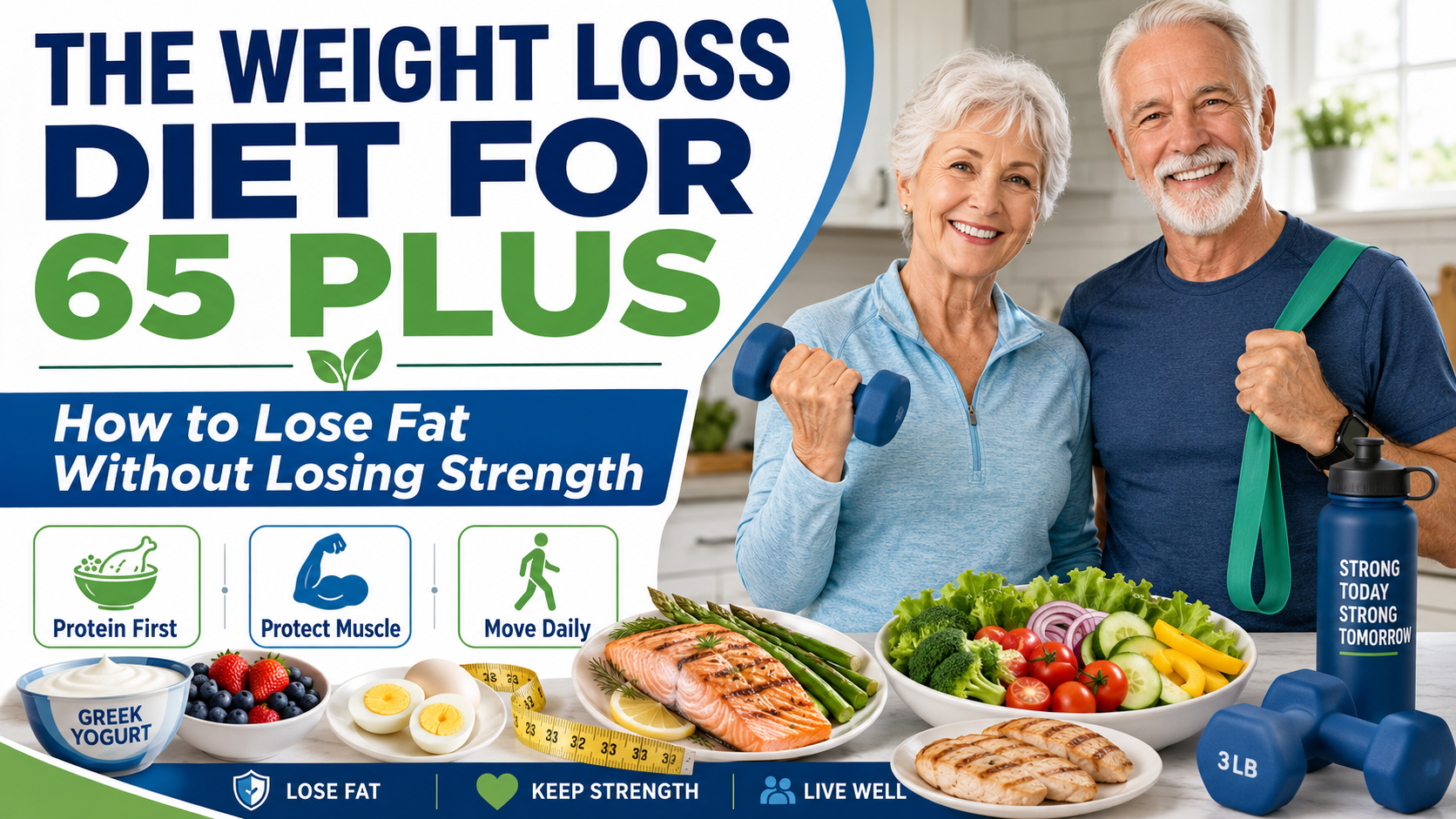
Lose fat, protect muscle, and keep your body strong enough to enjoy the years ahead.
That is the part many diet plans miss. They talk about calories, carbs, points, fasting windows, shakes, and miracle tricks. But for older adults, the wrong diet can backfire. If you lose weight too quickly or eat too little protein, you may lose muscle along with fat. That can make you weaker, not healthier.
And let’s be honest: nobody over 65 needs a diet plan that leaves them hungry, cranky, and staring into the refrigerator like it owes them money.
A good weight loss diet for 65 plus should be simple, affordable, satisfying, and built around real food.
Why Weight Loss Changes After 65
As we age, our bodies change. Muscle mass tends to decline. Activity may decrease. Hormones shift. Some medications can affect weight. Sleep may become less predictable. Joint pain can make movement harder. And metabolism may not run like it did when we were younger.
That does not mean weight loss is impossible. It means the plan has to be smarter.
The National Institute on Aging explains that healthy eating and physical activity are both important for maintaining a healthy weight as we get older. Older adults may need fewer calories than younger adults, but they still need enough nutrients to support health, strength, and energy.
That sentence is important: fewer calories, but not fewer nutrients.
That is why a 65-plus weight loss diet should not be built around starvation. It should be built around nutrient-dense foods: protein, vegetables, fruits, fiber, healthy fats, and enough hydration.
The goal is not to eat less junk and replace it with less food. The goal is to eat better food that helps your body function.
The First Rule: Protect Your Muscle
Here is the truth most diet advertisements do not tell you:
After 65, muscle is gold.
Muscle helps you stand up from a chair, climb stairs, carry groceries, avoid falls, stabilize blood sugar, and stay independent. Losing muscle can make everyday life harder. That is why weight loss after 65 must focus on fat loss, not just scale loss.
Harvard Health has warned that people trying to lose weight should be careful not to lose muscle. Slow weight loss, proper protein, and resistance training can help preserve muscle during weight loss.
That is the senior weight loss formula in plain English:
Protein plus movement plus patience.
Not glamorous. Not magic. But it works better than a grapefruit diet from 1978.
Protein Comes First
Protein is essential after 65 because the body uses it to maintain muscle, repair tissue, support immune function, and keep you feeling full.
Good protein choices include eggs, Greek yogurt, cottage cheese, fish, chicken, turkey, lean meat, beans, lentils, tofu, and protein-rich meal replacement options when used wisely.
Mayo Clinic Health System notes that the recommended dietary allowance for an average sedentary adult is 0.8 grams of protein per kilogram of body weight, while protein can make up 10% to 35% of daily calories. Some older adults, especially those trying to lose weight or preserve muscle, may need to pay closer attention to protein intake, and they should discuss personal needs with their doctor or dietitian.
A simple way to think about it is this:
Do not let breakfast be all toast.
Do not let lunch be just crackers and coffee.
Do not let dinner be a tiny bowl of soup and call it a day.
Each meal should include a protein anchor.
For example:
Breakfast could be Greek yogurt with berries, eggs with vegetables, or a protein bar with coffee.
Lunch could be tuna salad, chicken soup with beans, cottage cheese with fruit, or turkey on whole-grain bread.
Dinner could be salmon, chicken, lentils, eggs, tofu, or lean meat with vegetables.
Protein helps control hunger. It also helps prevent the classic diet disaster: losing 15 pounds but feeling weaker than before.
That is not a victory. That is a trade you do not want to make.
Use Joan’s Meal Replacement Bars the Right Way
For people who need a convenient option, Joan’s meal replacement bars can fit into a senior weight loss plan when used as part of a balanced diet.
The key word is replacement, not addition.
If you eat a full lunch and then add a bar “because it is healthy,” that may not help weight loss. But if you use a bar to replace a poor meal choice — like pastries, chips, cookies, or skipping lunch and overeating later — it can become a useful tool.
A smart use might be:
A Joan’s bar with coffee for a simple breakfast.
A bar with fruit when you are out and do not want fast food.
A bar as a planned snack to avoid evening overeating.
A bar after a walk when dinner is still hours away.
The goal is structure. The worst weight loss plan is the one where you “wing it” all day and then meet the refrigerator at 9 p.m. like it is an old friend.
You can learn more about healthy weight loss support at JoanBars.com.
Fiber Is Your Friend
Fiber helps you feel full, supports digestion, and may help with cholesterol and blood sugar control. For adults over 65, fiber-rich foods can be very helpful because they provide volume without too many calories.
Good fiber foods include oatmeal, beans, lentils, berries, apples, vegetables, chia seeds, whole grains, and nuts in modest portions.
MedlinePlus notes that good nutrition in later years can help reduce the risk of conditions such as osteoporosis, high blood pressure, heart disease, and certain cancers. Fiber-rich foods are part of that bigger picture because they help replace ultra-processed foods that often bring calories without much nutrition.
One easy rule:
Add before you subtract.
Add vegetables to lunch.
Add berries to yogurt.
Add beans to soup.
Add salad before dinner.
When you add better foods, you often naturally reduce the foods that are causing trouble.
That is much easier than walking around saying, “I can’t have this, I can’t have that,” until life feels like a punishment.
Beware of Liquid Calories
One of the easiest ways to gain weight after 65 is to drink calories without noticing.
Sweet tea, soda, juice, fancy coffee drinks, alcohol, sweetened creamers, and “healthy” smoothies can add up quickly.
This does not mean you can never enjoy anything. It means you should stop pretending drinks do not count. They count. Your body counts them even if your brain tries to put them in the “beverage exception” category.
Better choices include water, unsweetened tea, black coffee, sparkling water, or coffee with a small amount of milk.
Green tea can be a nice afternoon habit. It is inexpensive, stores well, and gives you something warm to enjoy without turning snack time into cookie time.
Build the 65-Plus Plate
A simple senior weight loss plate does not need to be complicated.
Aim for:
Half the plate: non-starchy vegetables.
One quarter: protein.
One quarter: high-fiber carbohydrates.
Add a small amount of healthy fat.
That could look like grilled chicken, vegetables, and a small sweet potato.
Or salmon, salad, and brown rice.
Or eggs, sautéed vegetables, and whole-grain toast.
Or beans, vegetables, and a little avocado.
This style of eating works because it does not ban entire food groups. It simply puts food in the right order.
Protein first. Vegetables next. Smart carbs. Healthy fats.
That is not a fad diet. That is common sense with a fork.
Do Not Fear Carbohydrates — Choose Better Ones
Carbohydrates are not evil. But some are more useful than others.
For weight loss after 65, choose carbs that bring fiber, vitamins, minerals, and fullness.
Better choices include oatmeal, beans, lentils, fruit, sweet potatoes, brown rice, quinoa, and whole-grain bread.
Less helpful choices include white bread, pastries, candy, sugary cereal, chips, cookies, and sweet drinks.
The problem is not that you ate a potato.
The problem is that potato chips are designed to make you eat the whole bag while wondering who opened it.
Whole-food carbohydrates can fit into a healthy senior weight loss plan. Ultra-processed carbohydrates are where most people get ambushed.
Strength Training Belongs in the Diet Conversation
This may sound strange, but the best diet for 65 plus is not just food. It must include movement.
The CDC says adults need at least 150 minutes a week of moderate-intensity aerobic activity and at least two days a week of muscle-strengthening activity. The CDC also gives similar guidance specifically for adults 65 and older, including aerobic activity, strengthening, and balance-focused activity when appropriate.
That does not mean you need to join a gym and start grunting next to a 25-year-old lifting a truck.
Strength training can be simple:
Wall push-ups.
Chair squats.
Resistance bands.
Light dumbbells.
Heel raises.
Carrying groceries carefully.
Standing up from a chair several times.
The point is to remind your muscles they are still employed.
Mayo Clinic notes that strength training can help preserve and increase muscle mass and strength as people age and may help protect bone strength.
That is why dieting without strength work is risky. You want the body to burn fat, not raid your muscles like a burglar.
Move After Meals
One of the simplest habits for weight control is walking or moving after meals.
You do not need a marathon. Even a few minutes of light movement after eating can help your body handle blood sugar better and reduce the habit of collapsing into the chair after every meal.
Try a 5- to 10-minute walk after lunch or dinner.
No treadmill? Walk indoors.
Bad weather? Walk the hallway.
Bad knees? Try chair exercises or gentle standing movements.
The goal is simple: do not park your body immediately after eating.
Your body is not a storage unit. It likes movement.
Sleep and Stress Matter Too
Weight loss is not just calories. Sleep and stress affect hunger, cravings, energy, and motivation.
The CDC says healthy weight loss includes healthy eating patterns, regular physical activity, enough sleep, and stress management.
That is especially true after 65.
Poor sleep can make you crave sugar and snack more. Stress can lead to evening eating. Loneliness can make food become entertainment. Boredom can turn into grazing.
This is why a good weight loss plan should include routines:
A regular bedtime.
A morning walk.
A planned breakfast.
A protein-rich snack.
A simple dinner.
A kitchen closing time.
You are not just dieting. You are building guardrails.
A Simple 65-Plus Weight Loss Day
Here is what a practical day might look like.
Breakfast: Greek yogurt with berries and a small handful of nuts, or eggs with vegetables.
Lunch: A Joan’s meal replacement bar with fruit, or tuna over salad, or soup with beans and vegetables.
Snack: Cottage cheese, an apple with peanut butter, or unsweetened tea with a protein-rich option.
Dinner: Fish or chicken with vegetables and a small serving of brown rice, beans, or sweet potato.
After dinner: A short walk, green tea, and no wandering into the snack cabinet like you are on a treasure hunt.
This is not punishment. This is a plan.
The Bottom Line
The best weight loss diet for 65 plus is not the fastest diet. It is the one that helps you lose fat while protecting strength, energy, balance, and independence.
That means protein at every meal.
Fiber from real foods.
Fewer liquid calories.
Smarter portions.
Strength training.
Walking or movement after meals.
Enough sleep.
And a plan you can actually live with.
Because after 65, the goal is not to become a smaller version of yourself.
The goal is to become a stronger, healthier, more energetic version of yourself.
At JoanBars.com, the focus is simple: practical weight loss support that fits real life. Use smart meal replacements when they help, build meals around protein and fiber, and remember that healthy aging is not about perfection.
It is about better choices, repeated often enough to matter.
And that, thankfully, does not require a miracle.
It just requires a plan.