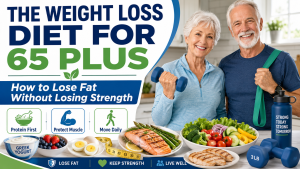
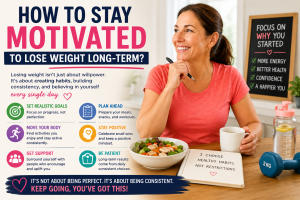
If losing weight were simply a matter of knowing what to eat, most of us would have solved the problem years ago.
We already know vegetables are better than doughnuts.
We know walking is better than sitting on the couch.
We know that eating an entire bag of chips while watching television probably does not qualify as portion control.
And yet millions of people lose weight, regain it, start another diet, lose it again, and repeat the cycle.
So perhaps the problem is not that people do not know enough about dieting.
Perhaps the problem is dieting itself.
The most effective approach to weight loss is usually not finding the strictest plan you can tolerate for six weeks.
It is building a way of eating and living that you can continue when the excitement wears off.
That is where long-term weight loss really begins.
The Diet Trap
Most diets start with enthusiasm.
Monday morning arrives.
The refrigerator gets cleaned out.
Bread becomes the enemy.
Salad becomes your new best friend.
You announce that sugar will never cross your lips again.
By Wednesday afternoon, that cookie in the break room begins negotiating with you like a hostage negotiator.
By Saturday, the diet is over.
Sound familiar?
The problem with highly restrictive diets is that they often require us to behave in ways we are not willing — or sometimes able — to maintain indefinitely.
That does not mean all structured eating plans are useless.
A structured plan can help someone get started.
But there is a major difference between:
“What can I do to lose weight quickly?”
and
“What can I continue doing after I lose the weight?”
That second question matters much more.
The Centers for Disease Control and Prevention notes that people who lose weight gradually — roughly 1 to 2 pounds per week — are more likely to keep it off than people who lose weight more rapidly. Healthy weight management also involves nutrition, physical activity, adequate sleep and stress management.
That may not sound as exciting as “Lose 20 Pounds Before Saturday!”
But it has one enormous advantage.
It is realistic.
Stop Trying to Be Perfect
One of the biggest enemies of weight loss is not food.
It is perfection.
People often believe they must follow their eating plan perfectly.
Then one meal goes wrong.
They eat pizza.
Or dessert.
Or they go to a family celebration and eat more than planned.
Suddenly they think:
“Well, I ruined the diet.”
Then one imperfect meal becomes an entire weekend.
But think about the logic.
If you got one flat tire, would you get out of the car and slash the other three?
Of course not.
Yet that is exactly what people do with their diets.
One meal rarely determines whether you gain or lose weight.
Your patterns do.
Instead of demanding perfection, aim for consistency.
If most of your meals support your goal, the occasional indulgence does not erase everything else.
Build Meals That Actually Satisfy You
Hunger is one reason restrictive diets become difficult to maintain.
If lunch consists of three lettuce leaves and a heroic amount of optimism, there is a good chance you will be looking for food again at 3 p.m.
A sustainable meal should actually feel like a meal.
One useful approach is to build meals around several basic components.
1. Start With Protein
Protein can help with fullness and is particularly important when losing weight because dieting can result in loss of both body fat and lean tissue.
Examples include:
- Eggs
- Greek yogurt
- Cottage cheese
- Chicken
- Turkey
- Fish
- Lean beef
- Beans
- Lentils
- Tofu
- Tempeh
You do not need to turn every meal into a bodybuilding competition.
The goal is simply to make protein a regular part of your meals rather than an afterthought.
2. Add High-Fiber Foods
Fiber-rich foods generally take longer to eat and can make meals more filling.
Think:
- Vegetables
- Fruit
- Beans
- Lentils
- Oatmeal
- Whole grains
- Chia seeds
An apple requires considerably more participation than apple juice.
That matters.
Whole foods tend to make you work a little harder for your calories.
The Calories You Drink Still Count
Liquid calories are surprisingly easy to overlook.
A sweetened coffee drink in the morning.
Soda at lunch.
A smoothie in the afternoon.
A couple of glasses of wine at dinner.
Individually, they may not seem enormous.
Together, they can quietly add hundreds of calories to the day.
Water, sparkling water, unsweetened tea and coffee can reduce those calories without necessarily reducing the amount of food you eat.
That does not mean you can never have a sweetened drink again.
It simply means beverages deserve the same attention as food.
Calories apparently did not receive the memo that liquids don’t count.
Portion Size Still Matters
Healthy food can still contain plenty of calories.
Nuts are nutritious.
Olive oil is nutritious.
Avocados are nutritious.
Peanut butter is nutritious.
But nutritious and calorie-free are two completely different concepts.
A tablespoon of olive oil is very different from pouring it freely over a salad until the lettuce needs a flotation device.
You do not necessarily need to weigh every bite of food forever.
But temporarily measuring calorie-dense foods can be eye-opening.
Often the problem is not what we eat.
It is how much.
Do You Need to Count Calories?
Not everyone needs to count calories.
Some people find tracking extremely useful.
Others would rather file their taxes twice.
Calorie tracking can teach you where your calories are coming from, particularly when you are first trying to understand your eating habits.
The National Institute of Diabetes and Digestive and Kidney Diseases offers a free Body Weight Planner that allows adults to estimate how changes in calorie intake and physical activity may affect weight over time.
You can explore it here:
But remember that calorie estimates are estimates.
Your body is not a pocket calculator.
Weight changes affect energy needs, appetite and metabolism over time, which is one reason real-world weight loss does not always follow a perfectly straight mathematical line.
Walking Is More Powerful Than People Think
People sometimes assume weight loss requires joining a gym, buying equipment or engaging in workouts that make them question their life choices.
Not necessarily.
Walking is one of the simplest tools available.
You can start almost anywhere.
You do not need special equipment beyond decent shoes.
And you do not have to complete your physical activity all at once.
The NIDDK notes that short periods of activity — such as a 10-minute walk — can be incorporated throughout the day.
Consider walking:
- After breakfast
- After lunch
- After dinner
- While talking on the phone
- During television commercials
- Around the parking lot before entering a store
Ten minutes does not sound impressive.
But three 10-minute walks equal 30 minutes.
Do that regularly and the small numbers begin adding up.
Strength Training Matters Too
Weight loss should not only be about making the scale go down.
It should also be about preserving the body underneath the weight.
Resistance exercise can help maintain and build muscle.
You do not necessarily need giant barbells.
Depending on your ability, strength work might include:
- Chair squats
- Wall push-ups
- Resistance bands
- Light dumbbells
- Bodyweight exercises
- Gym machines
Especially as we get older, maintaining muscle becomes increasingly important for strength, balance, mobility and everyday independence.
The goal should not simply be becoming lighter.
It should be becoming healthier and more capable.
Sleep Can Affect Your Appetite
Here is one weight-loss tool nobody sells in a bottle:
Sleep.
When people sleep poorly, staying consistent with healthy eating can become considerably harder.
Fatigue changes decisions.
You are less likely to exercise.
You may crave convenient, high-calorie foods.
You may snack simply because you are awake longer.
The CDC includes adequate sleep as one of the lifestyle factors that supports healthy weight management.
So if you are obsessing over whether your salad dressing contains 30 extra calories while sleeping five hours a night, you may be worrying about the wrong problem.
Stress Eating Is Real
Sometimes we are not eating because we are hungry.
We are eating because we are tired.
Or angry.
Or bored.
Or lonely.
Or frustrated.
Food is exceptionally talented at temporarily changing how we feel.
Unfortunately, chocolate cake is a poor psychotherapist.
This is why sustainable weight management has to go beyond nutrition.
When you reach for food between meals, ask:
Am I physically hungry, or am I trying to change the way I feel?
There is no shame in either answer.
The value is simply recognizing the difference.
Sometimes what you need is food.
Sometimes what you need is a walk, a telephone call, a shower, a nap, music, fresh air or ten minutes away from whatever is driving you crazy.
Make Your Environment Do Some of the Work
Willpower is overrated.
If a bowl of candy sits two feet from you all evening, eventually that candy is going to start looking very persuasive.
Instead of depending entirely on discipline, change your surroundings.
Keep healthier choices where they are easy to see.
Put fruit on the counter.
Keep yogurt in the refrigerator.
Prepare protein ahead of time.
Buy foods in smaller portions.
Do not bring home foods you know you routinely overeat.
This is not weakness.
It is strategy.
People like to say:
“I should have enough willpower.”
Why?
Do we leave the front door open all night just to prove we have enough willpower not to get robbed?
Make the healthier choice easier.
The Scale Is Useful — But It Can Also Lie to You
Your body weight changes from day to day because of:
- Water
- Sodium
- Carbohydrate intake
- Digestion
- Hormones
- Exercise
- Time of day
That means gaining two pounds overnight does not automatically mean you gained two pounds of body fat.
Look at trends.
If daily weighing makes you anxious, weigh yourself less frequently.
If it helps you stay accountable, weigh consistently under similar conditions.
But do not allow one number on one morning to determine whether you believe your entire effort is succeeding.
What About Weight-Loss Medications?
Medications have changed the weight-loss conversation dramatically.
For some people with obesity or certain weight-related health conditions, prescription weight-management medications may be appropriate.
But they are medical treatments, not casual dieting products.
They can have side effects, contraindications and costs that need to be discussed with a healthcare professional.
They also do not make nutrition, activity and long-term habits irrelevant.
If you are considering medication-assisted weight loss, talk with a qualified healthcare provider who knows your medical history rather than relying on social-media testimonials.
That influencer showing you dramatic before-and-after photos does not know what medications you take.
Your doctor does.
Forget the Finish Line
Here may be the most important idea of all.
Weight management does not really have a finish line.
That sounds discouraging until you think about it differently.
You brush your teeth every day.
You do not say:
“I’ve brushed them for six months. Surely I’m finished now.”
Healthy habits work the same way.
The goal is not to suffer through a temporary program until you reach a number on the scale.
The goal is to gradually create a lifestyle that keeps you somewhere near that number without requiring your entire life to revolve around dieting.
That means your plan should include foods you enjoy.
Restaurants.
Holidays.
Birthdays.
Vacations.
Dessert occasionally.
Real life.
Because if your weight-loss method only works when life is perfectly controlled, it doesn’t really work.
Start Smaller Than You Think
You do not need to reinvent your entire life tomorrow morning.
Pick one or two things.
For example:
This week:
Replace sugary drinks with water on most days.
Walk for ten minutes after dinner.
Next week, perhaps add protein to breakfast.
Then begin paying attention to portions.
Small changes can feel unimpressive.
That is exactly why they often work.
You can repeat them.
According to the CDC, creating specific, realistic goals can help people make sustainable progress with weight loss.
The Best Diet May Be the One You Can Forget You’re On
If every waking moment is spent thinking about food, calories and everything you are forbidden from eating, your plan probably has an expiration date.
Successful weight loss should eventually become less dramatic.
Breakfast becomes breakfast.
Walking becomes part of your day.
Vegetables become normal.
Dessert becomes something you enjoy occasionally instead of something you feel guilty about.
And one day you realize:
You are not really “on a diet” anymore.
You simply changed the way you live.
That is the part the diet industry rarely puts on the cover of a magazine because it is not very exciting.
But it may be the closest thing we have to the truth.
You do not need the perfect diet.
You need habits you are willing to keep.
And that is where lasting weight loss begins.
For more practical weight-loss and healthy-living ideas, visit JoanBars.com.
This article is for general educational purposes and is not a substitute for individualized medical or nutritional advice. If you have medical conditions, take medications, or are considering a significant change in diet or exercise, discuss it with your healthcare professional.